One Platform for Documents, Metadata, and Audit — Not Three
Most organizations assume audit and metadata management require dedicated tools layered on top of their document platform. With Pydio Cells, that assumption doesn't hold: both are core capabilities, not add-ons.
Advanced Auditability & Metadata System
Here are a few of the ways we help you meet your audit and metadata challenges:
-
Per-user, per-file audit logs: Every access, edit, share, and permission change is logged individually — kept separate from system logs so compliance reporting doesn't require sifting through operational noise.
-
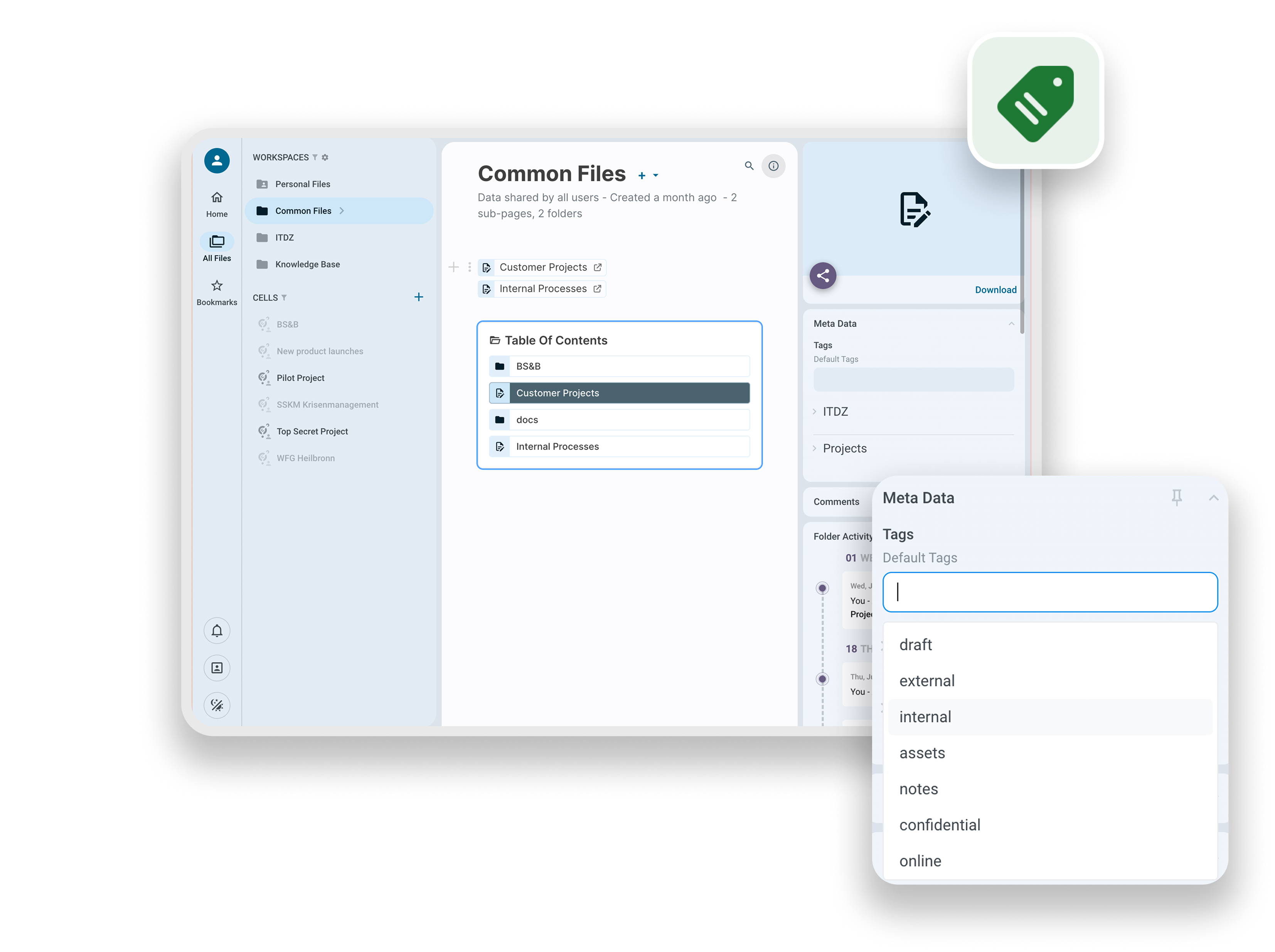
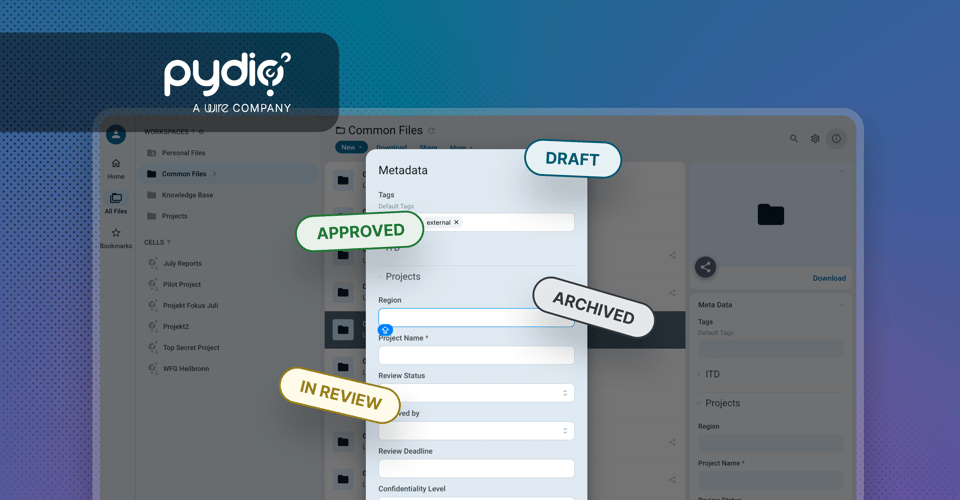
Rebuilt metadata system (v5): Cells allows users to create and define almost any type of file metadata, specify the order fields appear in, and set whether they can be used as search criteria. Learn more here.
-
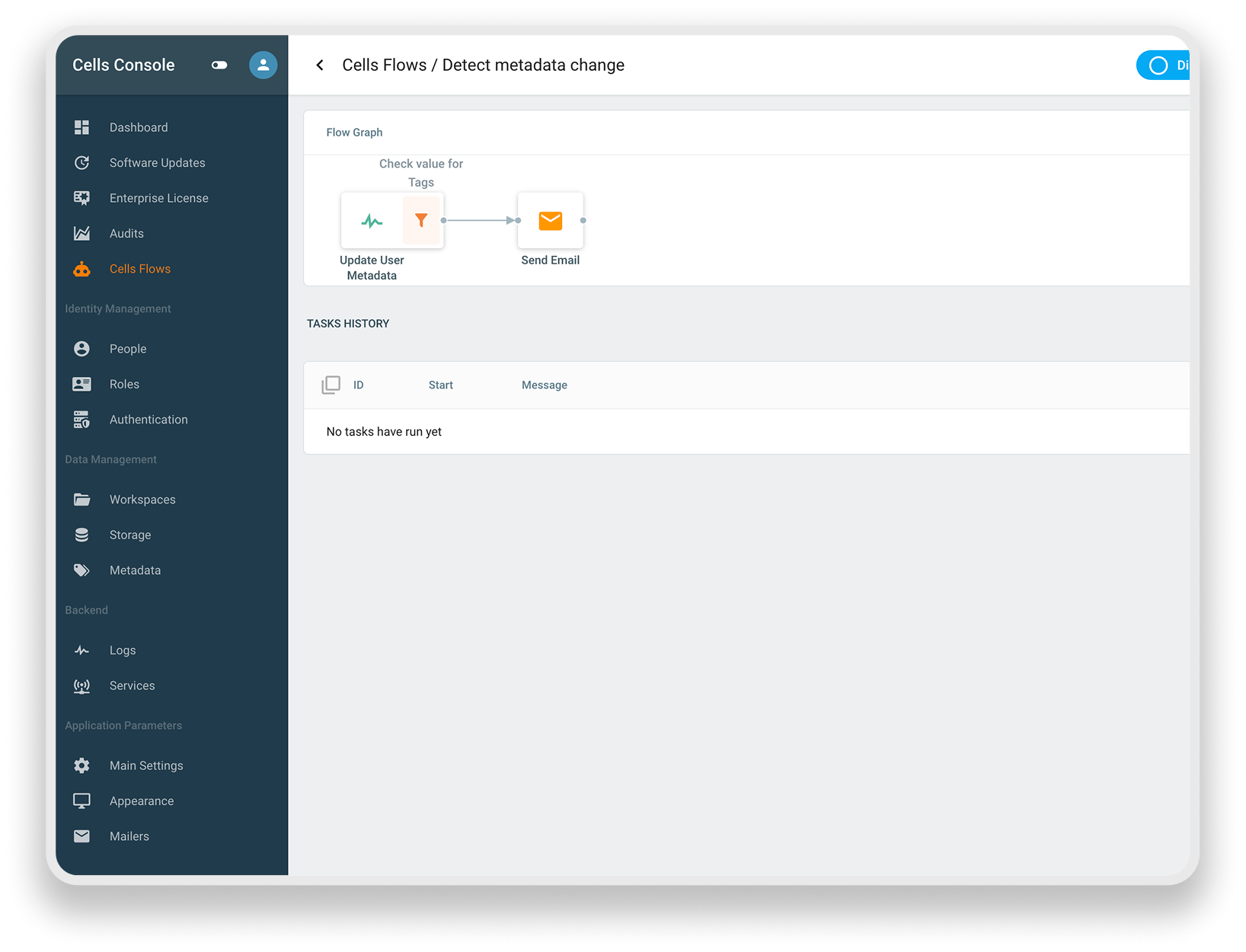
Automated metadata capture via Flows: Cells Flows can enforce metadata completion at upload, apply classification tags based on workspace rules, and trigger notifications when documents are created in a project Cell, so every new document is tagged and governed from minute one, without manual tagging.
-
Granular, identity-linked access controls: Role-based permissions tied to your existing directory via SAML, OIDC, or LDAP mean access logs map directly back to real identities, not shared or ambiguous accounts.
-
Retention and lifecycle policies: Configurable retention rules, also enforced through Flows, ensure documents age out, get flagged, or get archived automatically — reducing manual tracking and audit prep time.
-
Controlled external disclosure: Expiring, password-protected share links and watermarking on shared documents give compliance teams a controlled way to share sensitive files externally without losing the audit trail.
-
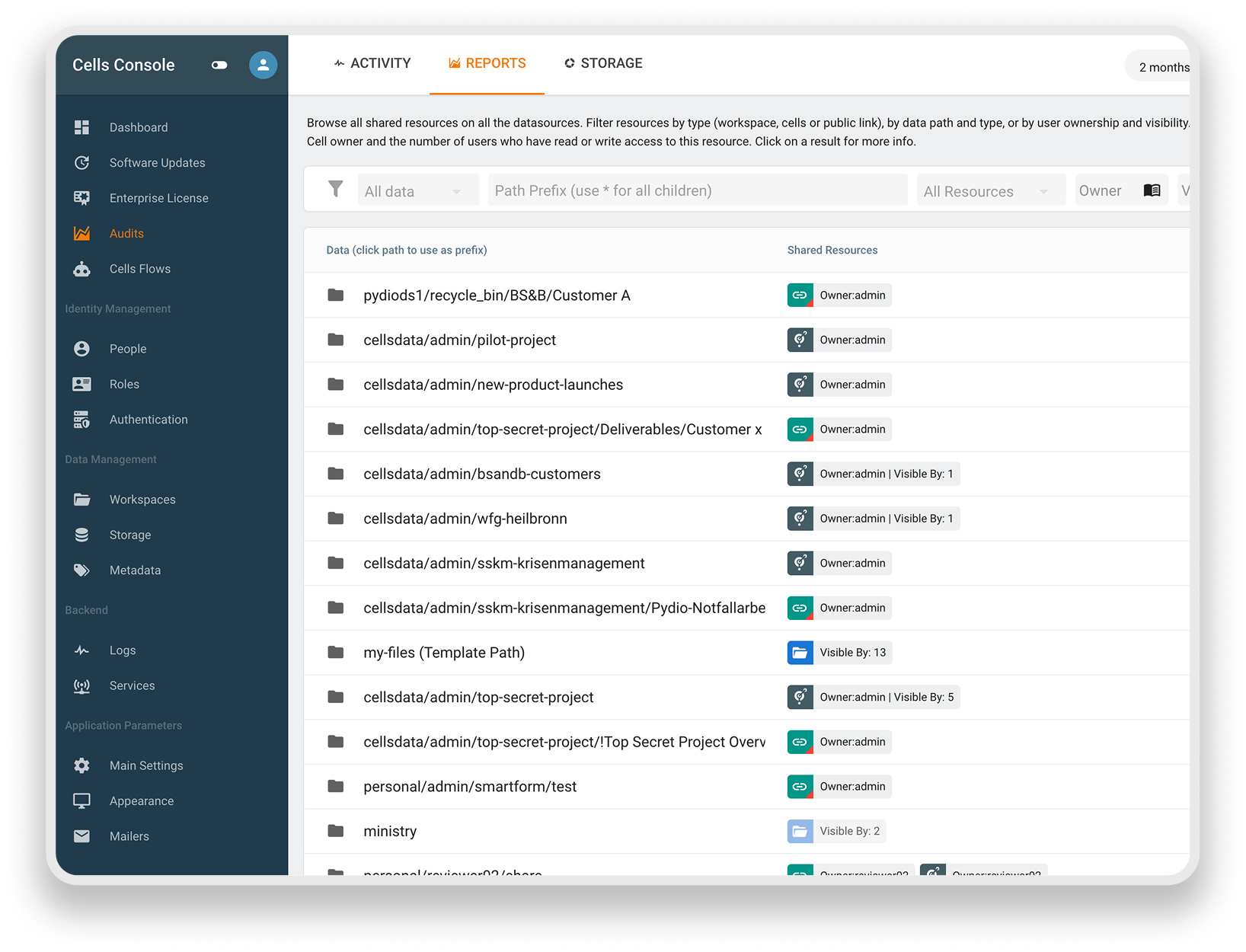
Compliance dashboards and reporting: A full suite of customizable dashboards and audit tools designed to support GDPR, HIPAA, PIPEDA, and NIS2 reporting requirements, built for admins and managers to use directly.
-
NLP-powered search across metadata and content: Full-text search spans connected storage backends (local filesystem, S3-compatible, Azure Blob, Google Cloud Storage) as well as metadata and page content, so classified documents stay findable, not just tagged.
-
Data sovereignty by architecture: Self-hosted on-premises, in a private cloud, or in a sovereign regional cloud of your choice. Audit logs and metadata never leave infrastructure you control, with no CLOUD Act or PATRIOT Act exposure. Learn more about Cells' security in our whitepaper.
-
One system, not two: Audit logging and metadata management live in the same platform as the documents themselves, nothing to reconcile between a compliance tool and a document store.

.png?width=960&name=Oliver%20blog%20(24).png)